40,5″ A1 Full Colour E-Paper Display

Device type: Full Colour E-Paper Display
Technology: E Ink
Screen size: 40.5″
Format: A1
Resolution: 3060 × 4320 pixels
Pixel density: 131 ppi
Primary colours: Black, white, red, green, blue, yellow
Vivid information. Calm technology.
A large-format, full-colour electronic paper display that combines the natural appearance of printed posters with the flexibility of digital content updates.
40.5″ screen size | A1 format | Full Colour | Battery-powered operation
Digital technology on a human scale
In an increasingly energy-intensive digital world filled with constant visual stimulation, e-paper (electronic paper) technology offers a fundamentally different approach.
Information does not necessarily need to compete for human attention through moving images, intense lighting or constantly changing content. The right information, presented in the right place through a natural and calm visual format, can fulfil its purpose just as effectively.
Aligned with the human-centric design philosophy of Calm Technology, e-paper offers an alternative to conventional digital communication.
Respect for human attention.
A natural, paper-like appearance without backlighting. Visual communication without constant motion or unnecessary visual stimulation.
Conscious use of energy.
The e-paper display panel requires no energy to maintain the displayed content. Energy consumption is primarily associated with content updates, communication and the operation of the control electronics. As a result, the energy requirements of e-paper (electronic paper) are a fraction of those of conventional LCD and LED displays.
Freedom of placement.
Battery-powered operation and wireless communication enable installation without permanent power or data cabling.
Product overview
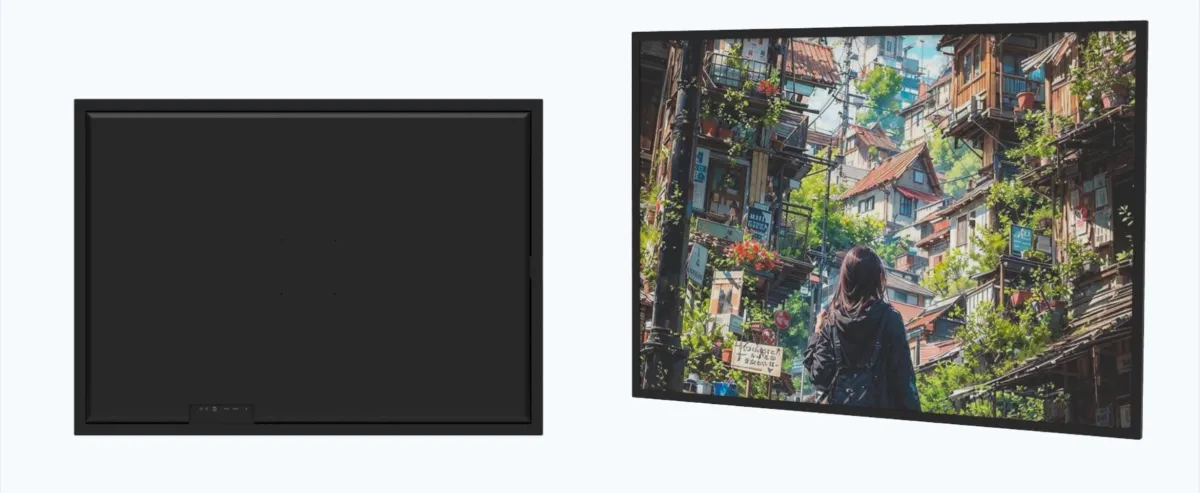
The 40.5-inch Full Colour E-Paper Display is based on colour electronic paper technology. Its display area, corresponding to the conventional A1 poster format, and its resolution of 3060 × 4320 pixels enable the presentation of large-format, highly detailed visual content.
Unlike conventional LCD and LED displays, electronic paper reflects ambient light rather than relying on backlighting. This creates a visual appearance closer to that of printed posters, while retaining the flexibility to update displayed information digitally.
The A1 format is particularly well suited to displaying posters, maps, information graphics, exhibition artwork and commercial advertising materials.
Key features
Full Colour E-Paper – colour electronic paper
The technology uses an imaging process based on six primary colours: black, white, red, green, blue and yellow.
Full-colour technology enables detailed, paper-like reproduction of photographs, illustrations, charts, branding elements and complex graphical content.
A1 – a digital alternative to conventional printed posters
The A1-format display offers a digital alternative in environments where visual communication has traditionally relied on printed posters, information boards or exhibition graphics.
Content can be updated without replacing or reprinting physical posters.
High-resolution display
A resolution of 3060 × 4320 pixels and a pixel density of 131 ppi enable the presentation of detailed text and high-quality graphical content.
Energy-efficient display technology
Displayed information and images remain visible even without a power supply. This technology offers a significantly more energy-efficient operating model compared with continuously powered, backlit LCD and LED displays.
Wireless communication
Integrated Wi-Fi and Bluetooth connectivity enable wireless content management and integration with IT systems.
Battery-powered operation
The 96 Wh lithium-polymer battery enables operation without a permanent power connection for several months, or even up to one year.
Battery life depends on the frequency of content updates, network communication and power management settings.
Recommended applications
The large-format, full-colour e-paper display offers a digital alternative to conventional printed posters and static information boards, suitable for events, commercial, cultural and institutional environments.
- Digital posters and signage
- Advertising and promotional displays
- Information and communication boards
- Digital wayfinding and directional signage
- Branding and visual communication
- Periodically updated graphical content
The natural, full-colour, paper-like appearance, energy-conscious operation and optional battery-powered configuration are particularly beneficial for digital signage applications that do not require continuous image updates.
Energy efficiency and sustainability
The energy required for digital communication is not necessarily proportional to the value of the information being displayed. A poster that remains unchanged for hours or days does not require continuous image refreshing.
Electronic paper technology takes advantage of this operating principle. The display panel requires no energy to maintain an image, while the content can be updated whenever necessary.
Replacing printed posters with electronic paper displays can reduce paper consumption, the need for reprinting and the labour associated with physical poster replacement.
Actual energy savings and environmental benefits depend on operating conditions, the frequency of content updates and the technology being replaced.
Technical specifications
| Device type | Full Colour E-Paper Display |
| Technology | E Ink |
| Screen size | 40,5” |
| Format | A1 |
| Resolution | 3060 × 4320 pixels |
| Pixel density | 131 ppi |
| Primary colours | Black, White, Red, Green, Blue, Yellow |
| Image refresh time | 21-45 seconds |
| Wi-Fi | IEEE 802.11 a/b/g/n/ac/ax |
| Bluetooth | 5.2 |
| Battery | 96 Wh, Li-polymer |
| Power supply | USB-C PD, 12 V / 2,5 A |
| Housing | Alumínium / SECC steel |
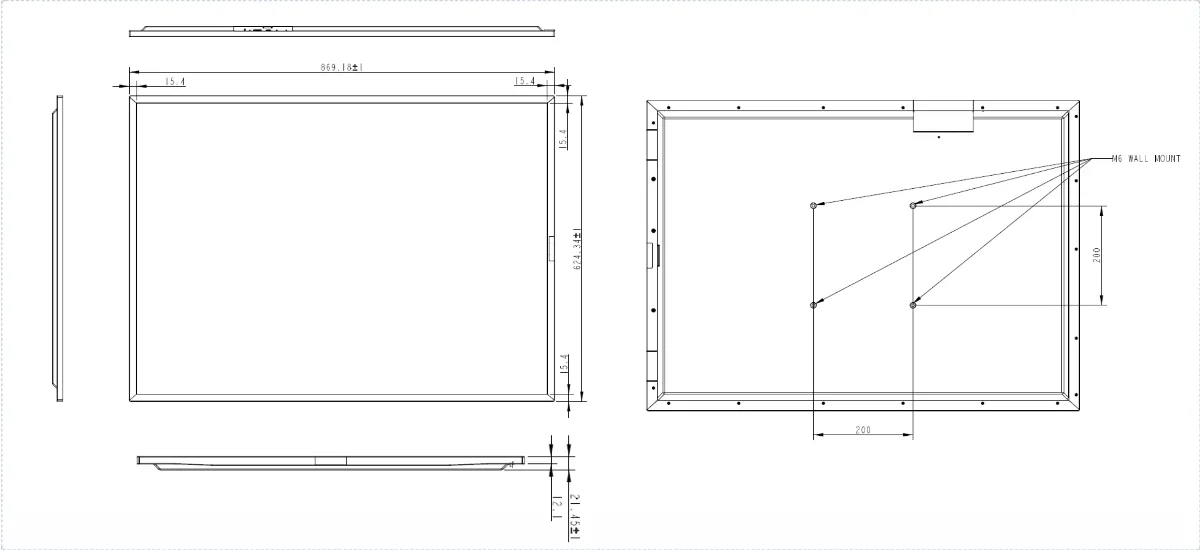
| External dimensions | 869,18 × 624,34 × 21,45 mm |
| Weight | 4,5 kg |
| VESA mounting | 200 × 200 mm |
| Operating temperature | 0-50 °C |
| Storage temperature | -25-60 °C |
| Protective glass | Optional, 1,3 mm tempered glass |
| Storage media | MicroSD |
Operating requirements
E-paper display technology is designed for static and periodically updated visual content. It is not suitable for displaying videos, animations or information that changes every second.
The reflective display requires adequate ambient lighting. External illumination is required in dark environments.
Frequently asked questions (FAQ)
What does Full Colour E-Paper mean?
Full Colour E-Paper refers to colour electronic paper display technology. It uses an imaging process based on six primary colours to reproduce full-colour graphical content.
Does the display consume energy when the image remains unchanged?
The display panel requires no energy to maintain a static image. However, communication and the operation of the control electronics may consume energy.
How long can the display operate on battery power?
The operating time of the optional 96 Wh battery depends on the frequency of content updates, network communication and the device's power management settings. In certain operating scenarios, battery life can reach up to one year.
Can the display replace printed posters and advertising materials?
Yes, for static posters, advertising materials and graphical content. The A1 format and high resolution enable the detailed presentation of text, graphics and photographic content.
Does the image remain visible during a power outage?
Electronic paper retains the last displayed image even without a power supply. However, updating the displayed information requires an operational power supply and the necessary communication connection.
Can the display be used outdoors?
The display has an operating temperature range of 0 to 50 °C. Weather-resistant configurations and IP protection required for outdoor installation are available as optional features.
Is the display suitable for video playback?
No. With an image refresh time of 21–45 seconds, the display is designed for static and periodically updated content.
Product information and quotation requests
The appropriate configuration is determined by the intended application, installation environment, required quantity, frequency of content updates and battery-powered operation requirements.